Load-Shedding & Your Aircon: Protect It From Surges

Key takeaways
- The real damage from load-shedding usually happens the moment power returns, when a voltage spike hits your aircon's control board and compressor.
- A whole-home surge protection device plus a plug-level surge protector on the indoor unit gives your aircon two layers of defence.
- After an outage, wait a few minutes before switching the aircon back on so the compressor can settle and pressures can equalise.
- Signs of surge damage include a unit that trips the breaker, blows cold-then-warm, throws error codes, or refuses to power on at all.
- A burnt control board or seized compressor is a technician job, not a DIY fix, and often needs a Certificate of Compliance after repair.
If you want the short answer: fit a surge protection device at your distribution board and a plug-level surge protector on the indoor unit, and always switch the aircon off before a scheduled cut. That combination stops the vast majority of load-shedding surge damage before it reaches your electronics. Aircon surge protection during load-shedding is not complicated, but skipping it is how a working unit becomes a costly repair overnight.
Here in Gauteng we have spent years fixing aircons that survived the outage itself and then died the moment the power came back. This guide explains why that happens, how to spot a spike that has already hit your unit, and the practical steps that keep your compressor and control board safe.
How Load-Shedding Surges Damage Aircon Electronics
The power cut is not the problem. The danger is the transient voltage spike that arrives when the grid switches back on, or when a nearby storm or municipal switching event sends a surge down the line.
Your air conditioner is far more sensitive to this than an old kettle or a light bulb. Modern split units run on printed circuit boards, microprocessors and inverter drives, and these components are designed for a steady, clean supply. A sudden spike well above the normal 230 volts can punch straight through them in a fraction of a second.
South Africa saw just how real this risk is during the worst load-shedding years. In 2023 the country endured 335 days of load-shedding, and the insurance industry felt it directly: Santam, South Africa's largest short-term insurer, reported a 60% increase in power surge claims across its personal and commercial portfolios in the first half of 2023. Every one of those claims is an appliance, and aircons are frequently on the list.
Even now that scheduled outages are far less common, the grid is still not perfectly stable. Storms, cable faults and local switching all create spikes, so surge protection remains worthwhile whether or not load-shedding is back on the schedule.
Signs Your Unit Was Hit by a Power Spike
Surge damage is not always obvious. Sometimes the unit dies instantly, and sometimes a weakened component limps along for a week before it fails. Watch for these warning signs after an outage or a storm.
- The aircon will not power on at all. No lights on the indoor unit, no response from the remote, nothing. This often points to a blown control board or a tripped internal fuse.
- It trips your breaker the moment it starts. A short in the compressor or wiring will kick the breaker every time you try to run the unit.
- It blows cold, then warm, then cuts out. Erratic cooling can mean a damaged capacitor or a compressor struggling after a spike.
- Error codes on the display. Flashing lights or fault codes on the indoor unit are the board telling you something is wrong. Note the code before you call, as it helps the technician.
- Burning or electrical smell. A faint hot-plastic smell near the indoor or outdoor unit means you should switch it off at the wall immediately and stop using it.
- Strange buzzing or clicking that was not there before. Relays and contactors on a damaged board often chatter.
If your unit is showing more than one of these, treat it as a suspected surge casualty and avoid repeatedly switching it on. Each restart attempt can turn a small fault into a bigger one.
Surge Protection and Safe Restart Tips
Good protection works in layers. The goal is to catch a large spike at the distribution board and mop up smaller transients closer to the unit.
- Fit a surge protection device (SPD) at your DB board. This is the single most effective step. A licensed electrician installs it in your distribution board so it protects every circuit in the home, including the aircon. These devices are built to international standards such as the IEC 61643-11 requirements for low-voltage SPDs, which set out how they clamp and divert dangerous voltage. This is electrical work, so it should always be done by a qualified person.
- Add a plug-level surge protector on the indoor unit. For plug-in split units, a surge-rated plug adaptor gives you a second line of defence right at the appliance.
- Switch the aircon off before a scheduled cut. If you know load-shedding is coming, turn the unit off at the remote and, ideally, at the wall. A unit that is already off cannot be caught mid-cycle by the restart spike.
- Wait before you restart. When power returns, give it three to five minutes before switching the aircon back on. This lets the refrigerant pressures equalise so the compressor does not restart under load.
- Restart the indoor unit last. Let the household power settle first, then bring the aircon back on gently rather than everything at once.
There is a simple financial logic to all of this. If your insurer now charges a meaningful excess on every surge claim, a once-off SPD installation can pay for itself the first time it saves your unit. Santam, for example, introduced a R2,500 excess on power surge claims as claim volumes climbed.
Why Boards and Compressors Fail After Outages
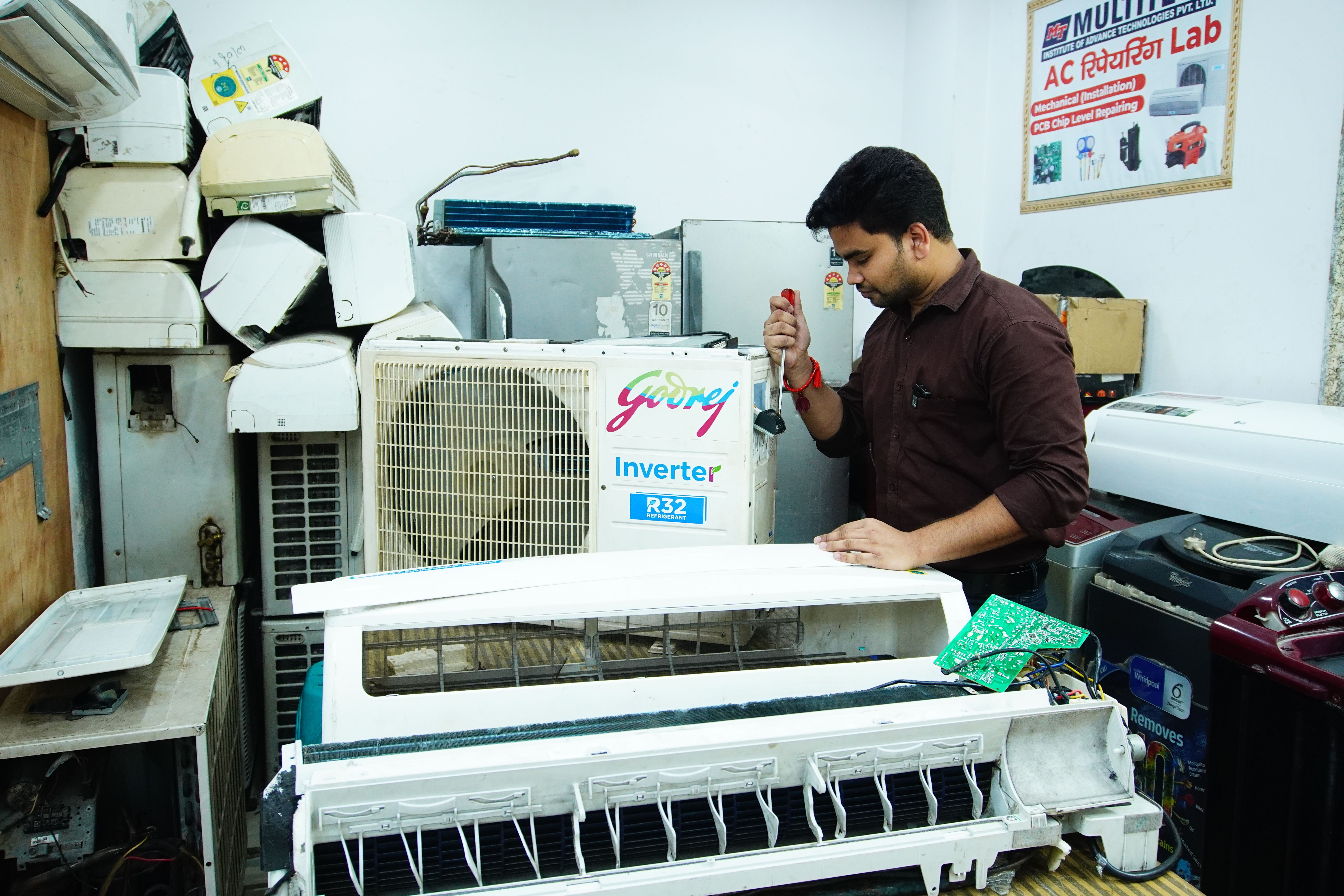
Two parts take the brunt of surge damage: the control board and the compressor. Understanding why helps you protect them.
The control board is the brain of the unit. It is packed with low-voltage electronics that expect a clean signal. A spike can burn tracks on the board, destroy relays, or fry the microprocessor outright. Once the board is gone, the unit usually will not power on or responds erratically.
The compressor is the heart, and it is the most expensive single part in most aircons. A surge can damage the compressor's windings or the capacitor that helps it start. Restarting a compressor too soon after an outage is also risky, because it may try to start against high internal pressure and stall. Repeated hard starts wear it out fast.
Technicians across the industry consistently report that compressors, capacitors and control boards are the components most often destroyed by voltage spikes. That matches what we see on Gauteng call-outs after a bad storm or a run of outages: a cluster of dead boards and a few seized compressors, almost all traceable to a surge rather than normal wear.
This is also why a preventative approach beats a reactive one. A well-maintained unit with clean electrical connections rides out a spike far better than a neglected one. Regular servicing catches loose terminals and tired capacitors before a surge finds them. If you are due, our guide on what an aircon maintenance service includes walks through exactly what a proper service covers.
When to Call a Technician for Surge Damage
Some aircon problems are safe DIY checks. Surge damage is usually not one of them, because it involves live electrical faults and sealed refrigerant systems.
Call a licensed technician when:
- The unit trips the breaker every time it starts.
- There is any burning smell, scorching or visible damage.
- The display shows fault codes you cannot clear with a normal reset.
- The unit is completely dead after an outage.
- Cooling is erratic or the compressor is buzzing without running.
Before you assume the worst, it is worth ruling out the simple stuff. Confirm the breaker has not simply tripped, check that the thermostat is set correctly, and make sure the filters are clean. If those come back clear and you have had a recent outage or storm, surge damage moves to the top of the list.
Repairs involving the board, compressor or wiring should be handled by a licensed, insured technician who can issue proper documentation. At Airconmaster our team carries out surge-damage diagnostics across Johannesburg, Pretoria, Centurion, Midrand, the East Rand, West Rand and the Vaal, and our registered electricians can issue a Certificate of Compliance where electrical work is involved. You get an upfront written quote before any work starts, plus a workmanship guarantee and parts warranty on the repair.
Book a Surge-Damage Inspection
If your aircon has taken a knock from a spike, do not keep switching it on and hoping. Each attempt risks turning a repairable fault into a compressor replacement. Book a proper inspection instead, get an honest written quote, and know exactly what you are dealing with.
Call Airconmaster on 060 959 2231, message us on WhatsApp, or request your free written quote online. We offer same-day and 24/7 emergency call-outs across Gauteng, with licensed and insured technicians and 15-plus years of local experience behind every repair. Whether it is a burnt board, a seized compressor or just peace of mind before the next storm season, we will get your cooling back and help you protect it for next time.
Frequently asked questions
Does load-shedding actually damage air conditioners?
Yes. The scheduled cut itself is harmless, but the voltage spike when power is restored can burn out control boards, capacitors and compressor windings. That surge is what causes most load-shedding aircon failures.
What is the best surge protection for an aircon during load-shedding?
A layered approach works best: a whole-home surge protection device fitted at your distribution board by a licensed electrician, backed up by a plug-level surge protector on the indoor unit. Together they absorb both large grid spikes and smaller everyday transients.
Should I turn my aircon off during load-shedding?
Yes, switch it off at the wall or remote before the scheduled cut, and wait a few minutes after power returns before switching it back on. This protects the compressor and avoids the restart spike hitting a running unit.
How long should I wait to restart my aircon after a power outage?
Give it at least three to five minutes. This lets internal refrigerant pressures equalise and protects the compressor from restarting under load, which is one of the most common causes of post-outage failure.
How much does surge-damage repair cost in Gauteng?
It depends on the part. A blown control board or capacitor is a moderate repair, while a failed compressor is one of the most expensive fixes. A licensed technician can give you an upfront written quote after a quick inspection.
Talk to a qualified technician
Free assessment, written quotation, same-day response across Gauteng.